
Biotending > Biohacking
why I dont want to hack my biology

On Trust
I’ve been thinking a lot about trust: who we trust with our health, who we believe when it comes to how we take care of ourselves—and more importantly, why.
If you’ve glanced at the Epstein files (yuck), you might have noticed a longevity expert you know and love. Loved.
Naming and shaming isn’t the point here, but it does raise a question that feels hard to ignore: can you trust someone with shaky moral ethics with something as intimate as your health?
For me, the answer is no.
I don’t know how to separate the person from the prescription. Not when it comes to the body.
What I Trust Instead
What I do trust is quieter. Older.
What I keep coming back to—what actually led me to seaweed in the first place—is how care gets passed down. Not through optimization, but through repetition, story, and people who lived it long before us.
For more than 30 years, my mom has started every morning with warm water and lemon. When I was younger, I thought it was just… mom stuff.
Now I see it for what it is.
You wake up dehydrated. You drink water. Lemon supports digestion, adds vitamin C. It’s simple, but it’s also a way of meeting the body gently, before the day asks anything of you.
No tracking. No performance. Just consistency.
Patterns, Not Hacks
I also trust patterns that show up across entire populations.
Places like Okinawa—where people historically live longer, healthier lives—aren’t built on protocols.
Life itself is the intervention: real food, daily movement, strong relationships, connection.
When you zoom out, it’s almost uncomfortable in its simplicity. Longevity isn’t coming from hacks. It’s coming from how people live.
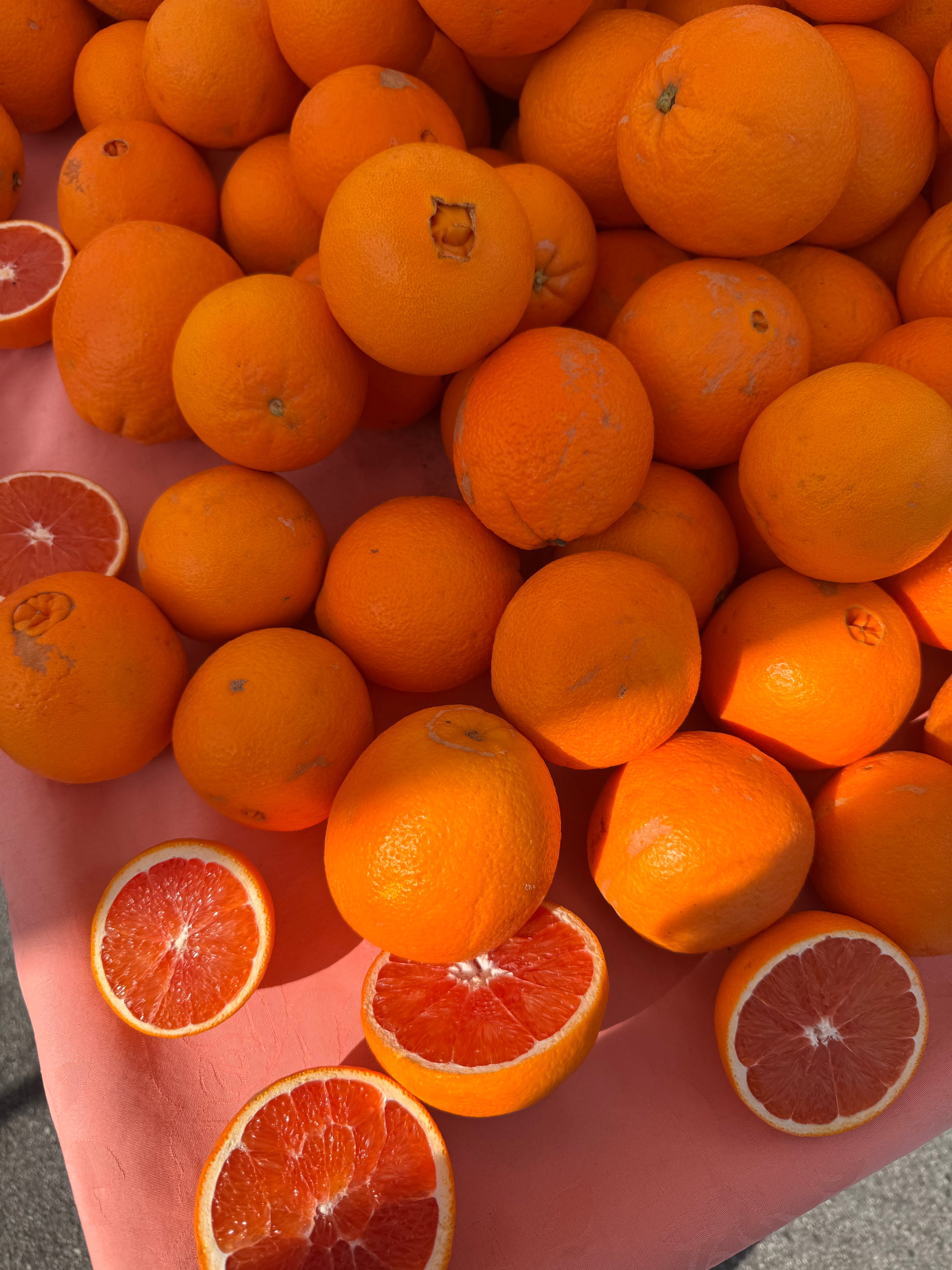
(my favorite day of the week: farmers market visit)
The Body Is Not a Mystery
If you listen closely, your body will talk to you.
Fatigue is a signal. Hair loss (hi, me right now) is a signal. Restlessness is a signal.
These aren’t inconveniences to override. They’re information. The harder move is not fixing them immediately. The harder move is listening.
A Different Approach
Lately, I’ve been thinking about a different approach.
I don’t want to hack my biology. I want to tend to it.
Biotending.
Not optimizing. Not controlling. Not trying to outsmart something that is, frankly, more intelligent than I am.
Tending.
Paying attention. Noticing patterns. Responding with care. Letting that be enough.
What Actually Works
There’s a version of health that is almost embarrassingly simple.
Eat well.
Move your body.
Rest.
Spend time with people you love and who love you.
Be in nature.
There you go. That is the prescription.
Here’s The Kicker
These are the modern “protocols” that we’ve somehow turned into expensive versions of themselves:
Luxury supplement stacks (as promoted by others I personally don’t trust)
Boutique fitness classes
Expensive therapy apps (therapy is valuable — I’ve been in it for years — but it doesn’t replace the nourishment of community)
High-end “recovery” experiences
Meanwhile, nature is mostly free. (Although not accessible to all of us).
Today, the U.S. wellness industry is projected to be a multitrillion-dollar juggernaut. Most of the true longevity pillars above are inexpensive by comparison.
Do you see what I’m getting at?
The Tension
I’m aware of the tension in writing + living this this while also building a consumer brand.
I’ve been told SO many times to put seaweed in a pill. It would be easier. Cheaper. More scalable.
But it would also miss the point.
I don’t want nourishment to feel medicinal. I don’t want it to feel like something you take because something is wrong with your body.
I want it to feel like something you can enjoy. A small, daily act of care.
This is the beginning of a series.
Next: Food as Medicine — Part I
Why your body responds differently to real food than isolated nutrients.
I’d love to hear from you.
What’s one small thing you do every day that makes you feel more like yourself?
How do you biohack biotend?
My guess is it matters more than you think.