
on provenance
ep 8: why I started writing love letters, and why you should too

A month ago (sheesh), I read something that got me thinking, and then researching, and then writing. I posted my first “note” about it, and so many of you responded. Thank you to everyone who engaged with me on this topic; your reflections genuinely deepened mine.
This is certainly a musing from the middle, because the more I learn, the deeper I want to go. But for now, here’s where I’ve landed.
There’s a commonly held belief that ideas are not new.
My brilliant friend Bronwyn wrote about this recently in her Substack (follow her!!!), and my friend Maen, whose brain I love to dissect, said something that really stuck: ideas don’t belong to us. They belong to the universe. We’re just lucky enough to be their vehicles for a while.
Then there was a Jay Shetty x Madonna podcast (thank you, Ishi!) about Kabbalah and creative flow — same idea, different language. That what moves through us doesn’t start with us.
So maybe Shakespeare or Ecclesiastes or the nameless originator of the idea was right: maybe there are no new ideas. But lately, they sure are starting to sound the same. When AI becomes everyone’s editor, the edges that shape our language — the quirks, the textures, the lived experience — get sanded down.
What results is a thousand pieces that all sound “smart” and “authentic,” and the same.
I was going to write about about how AI-enabled writing is flattening our voices (there’s a great New Yorker piece on it). But I changed my mind.
Instead, I’m meditating on honoring the provenance of ideas — and end with a call to action (my favorite).
As Bronwyn so eloquently says: whether ideas are recycled, remixed, or reborn, they still pass through your uniquely human expression. Maybe the source code is shared, but the way we make sense of it — metabolize it through our stories, our bodies, our histories — is ours alone.
Jonathan Lethem once said the line between theft and tribute is taste and credit.
I love this SO MUCH. That’s where I land, too.
To me, credit isn’t about possession. It’s about provenance.
Putting your art and heart into the world — especially if it’s got your fingerprints all over it — is hard. Vulnerable. Exposing. I’ve been writing and expressing for years now (Rootless emails, podcasts, and now, this Substack), and I’ll tell you: sharing from the messy middle, particularly about my personal health journey, how I think + move in this world, is both a great joy and a deep ache.
So here’s my POV:
If someone’s ideas or expression have impacted you — please, cite your sources.
Tell them.
Write a love letter. Give your friends their flowers.
I’m a scientist by training. I was taught to cite my sources. Somewhere along the way, that practice evolved into something softer: writing love letters. I write love letters to people whose work has changed me all the time. I have an unsent love letter to Richard Powers in my phone (does anyone have this forest address so I can send him a letter?!).
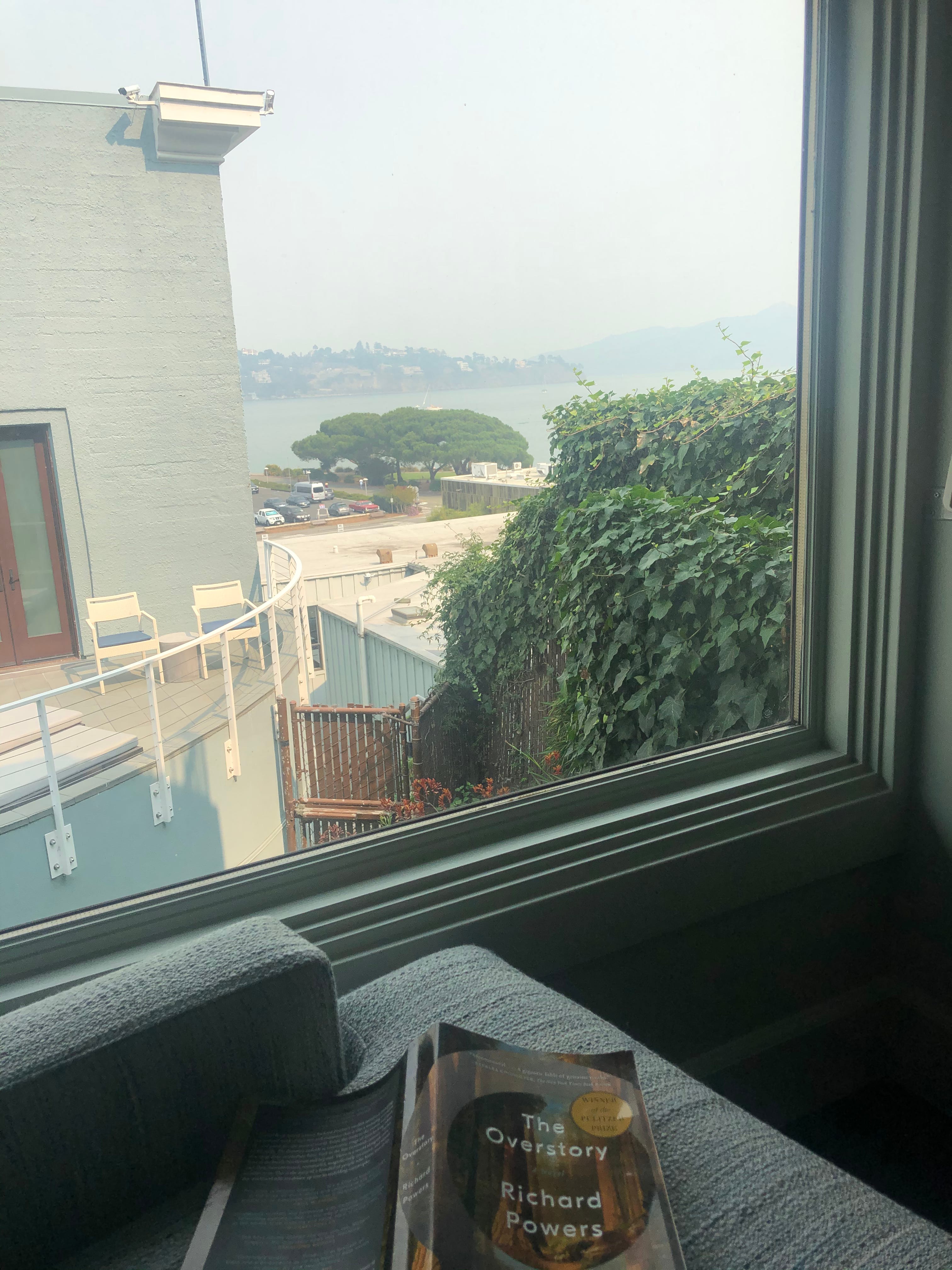
(dug this one out of the ARCHIVES: where I wrote my first love letter, Oct 2020!)
Practically speaking, giving credit also helps preserve provenance in an AI world. It’s not perfect, but it’s a start. And it’s something I’m committing to.
Because maybe no one truly owns an idea — but someone can steward it with care, by keeping its lineage visible, adding their lived experience, and protecting the weird little edges that make it human.